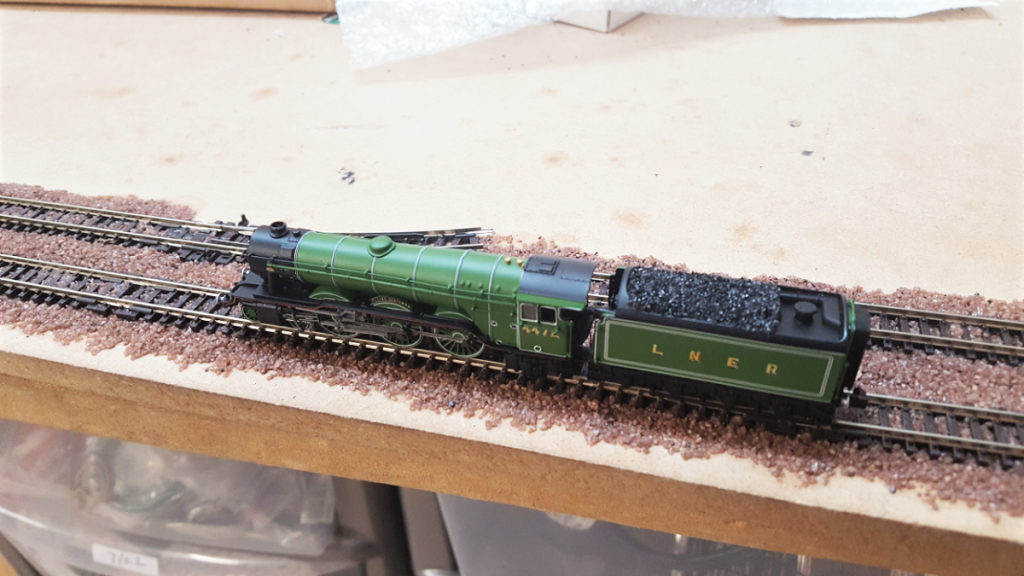
The best method we have found to fit sound to Dapol steamers is as follows, this method avoids any invasive surgery on the loco itself, all the work takes place in the tender so the loco will run exactly as originally manufactured, just with sound!! This method also has the advantage of fitting a full size sugarcube speaker giving excellent sound levels in N Gauge
- Remove the socket and de-solder all connections including capacitors
- Build up the edges of the motor magnets by gluing in some strips of plasticard to raise them a little
- Take a Zimo MX648 with suitable soundtrack and cut away all of the heat shrink isolating cover, de-solder unnecessary wiring from the decoder(green, brown, blue, yellow, white) this makes it small enough to fit over the motor
- Cover the decoder in Kapton tape to isolate it
- Cut the pickup and motor wires to length and solder into place, locating the decoder on top of the motor by gluing it in place against the plasticard raised points, this keeps it clear of the armature. When soldering to the motor terminals make sure you only “dab” solder as the heat can cause the brush casings to slide out as the plastic surrounds warm up with the soldering iron heat close by
- Locate a Sugarcube, Limo 6 or Microcube speaker in place where the socket was located. Ensure the tack you use does not touch the tender wheels as this will prevent them from turning. Wickness Black Tack is ideal for this. Solder in the sugarcube
- The shell will no longer fit as the decoder sits high so now you need to modify the tender shell. Depending on the model you have you may be able simply unclip the coal insert on the tender shell, if this is not possible dremmel all the coal out, cutting from the top allows you to ensure you dont go too close spoiling the bunker edges
- Add extra Kapton tape layers over the whole assembly to ensure that when you glue artificial coal over the surface neither glue nor coal will find its way into the mechanism. Picture below
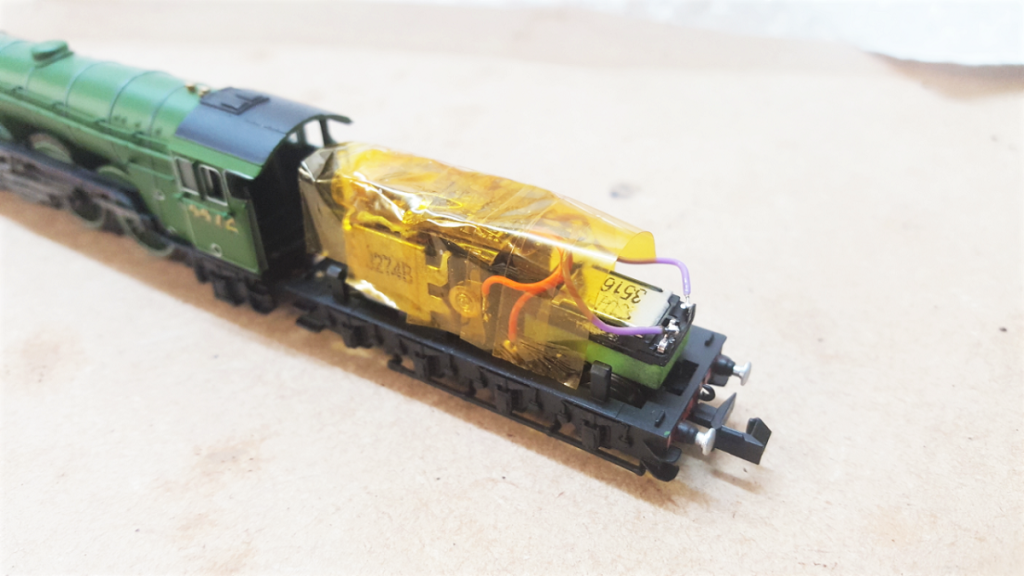
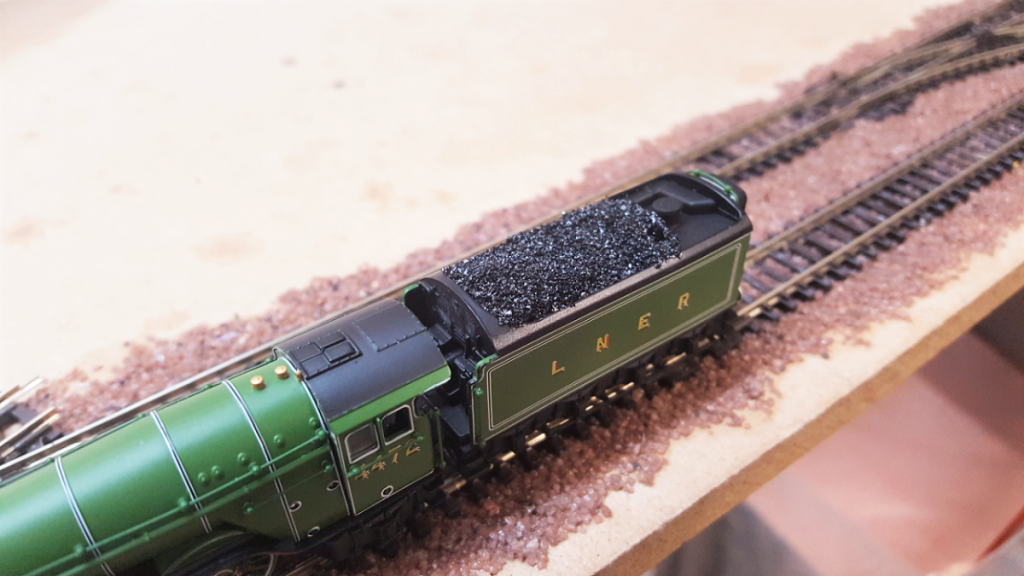
- Refit the tender shell. A picture of this can be seen below
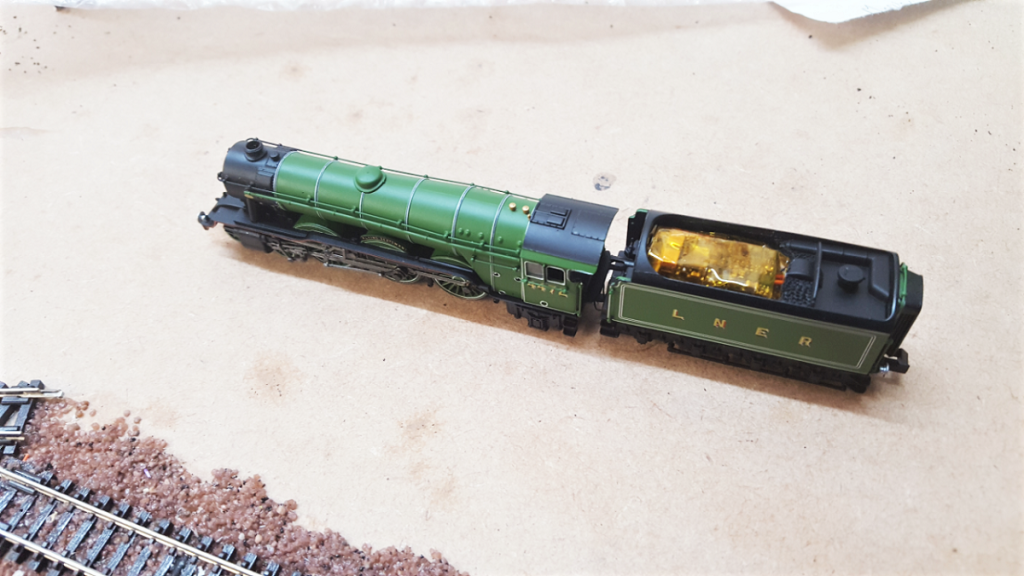
- Finally add artificial coal by filling the void with a good quality modelling glue and sprinkling n gauge artifical coal into place, alternatively you can stretch and seal black tack over the gap and sprinkle and push the coal into it, the model is now complete. See below
Note: Care of Dapol Steamers
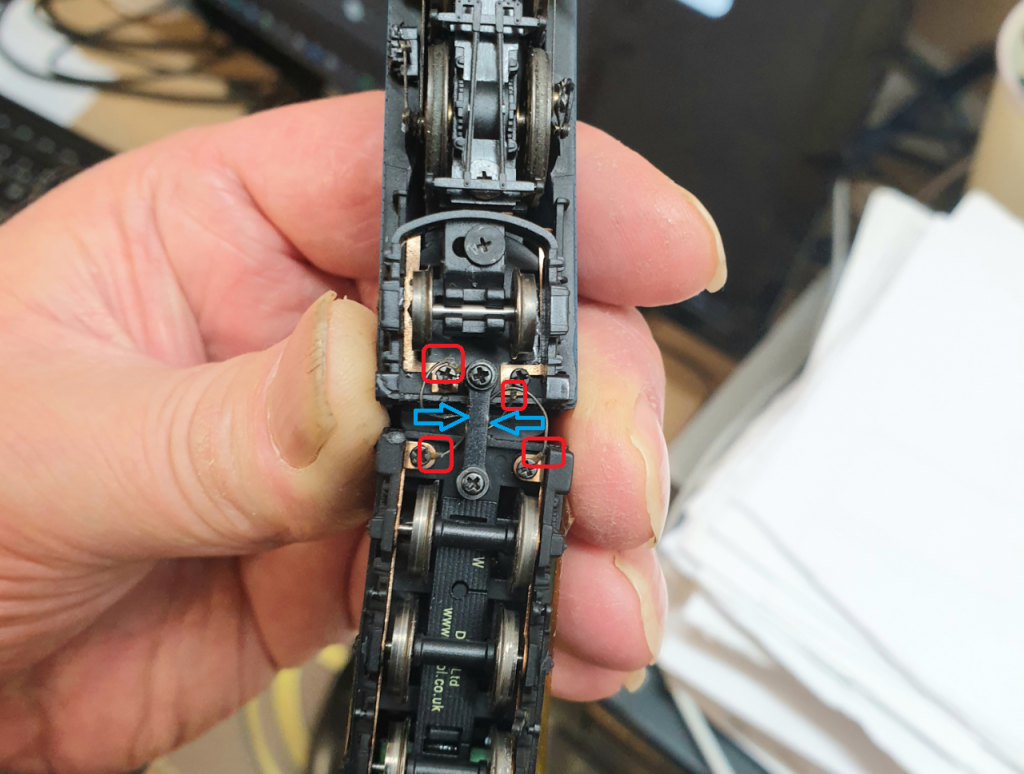
The wires connecting the front pickups to the tender are very fragile and when they break there is very little to solder to to effect a repair. They can be re-attached or repaired but it can be tricky so it is essential to look after these connections on your model. You should handle it very carefully as they are easy to break, in the picture below you can see the solder joints marked red and the looped wires should be between drawbar and chassis as shown(blue), if they pop out which they can, push the loops back in very gently back into place(between drawbar and chassis) with a small flat bladed screw driver